
The Clay & Glaze Notebook shares practical, down-to-earth guidance on pottery, ceramics and clay crafts for uk makers for readers across the UK.
- 0123456789
- Angle Bd Abdelmoumen & rue soumaya, Résidence
- [email protected]
The Clay & Glaze Notebook shares practical, down-to-earth guidance on pottery, ceramics and clay crafts for uk makers for readers across the UK.
 By Eleanor Bramley
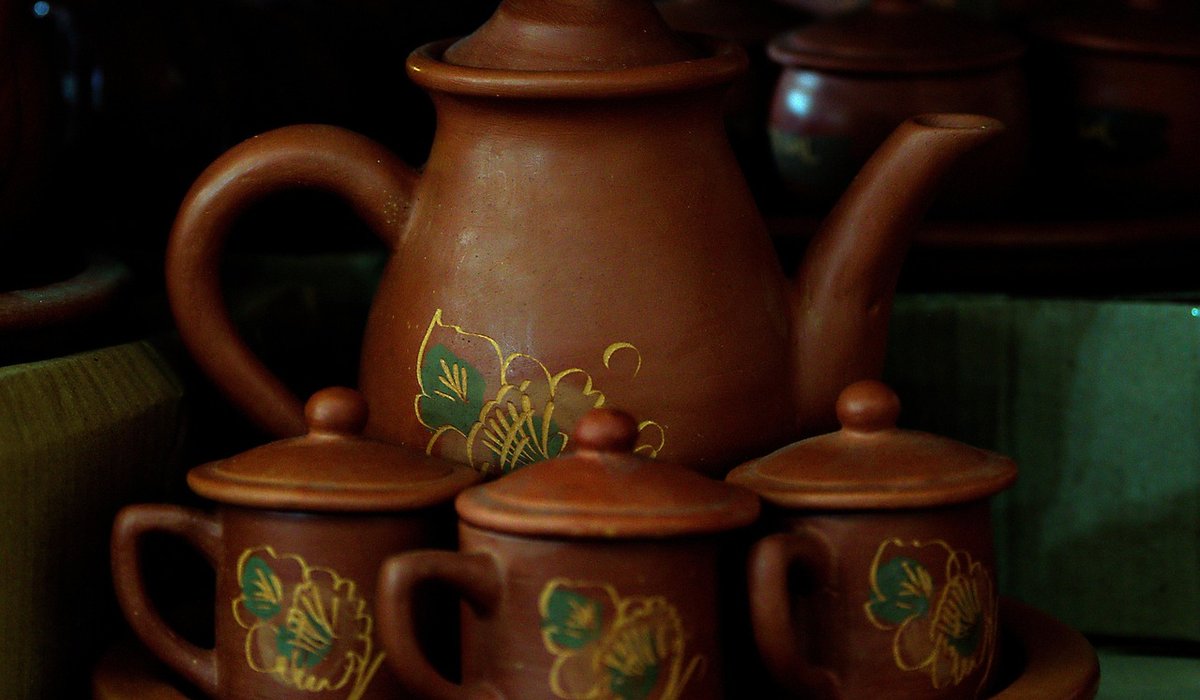
Of all the glazes a UK potter can mix in a bucket, a warm honey brown is probably the hardest-working. It flatters throwing rings, it breaks to a darker russet over a rim, it pools in the well of a bowl and it looks right on everything from a breakfast mug to a lidded casserole. It is also cheap, reliable and easy to mix from four or five materials you probably already have on the shelf.
This is a stoneware glaze built on feldspar, silica and a modest amount of iron oxide. Fired in oxidation in an electric kiln to around 1260–1280°C it gives a glossy amber with a soft, almost honeyed depth. In reduction it shifts toward a deeper toffee-brown with iron speckling. Either way it is durable enough for domestic ware, and it is a sensible glaze to have as your house standard.
Before you start weighing, it helps to know what each material is doing. An amber glaze is not a mystery — it is a glass with iron dissolved in it, and the balance of flux, glass-former and stabiliser decides whether you get honey, treacle or a dry orange peel.
This is a straightforward base to mix, test and then tweak to your own clay. Parts are by weight.
Add 1–2% bentonite if your glaze settles badly or you live in a hard-water area. Weigh everything carefully, particularly the iron — a tenth of a gram here and there will not ruin a bucket, but sloppy weighing is the usual reason a glaze drifts from firing to firing.
Mix the dry materials together first, then add water slowly and sieve twice through an 80 mesh sieve. Aim for a specific gravity of about 1.42–1.45, which means 100 ml of well-stirred glaze should weigh 142–145 g. If it is thicker than that it will go on too heavily when you dip; if it is thinner it will run off the pot and dry patchy.
Bisque fire to around 1000°C and dust the pots off properly with a damp sponge. A glaze thickness of roughly 0.5–0.7 mm is what you want — a two to three second dip for most small pots, or two or three passes with a spray gun. Thickness matters more than almost anything else here: too thin and the honey turns to a pale straw; too thick and it goes dark treacle, then crawls.
Fire to 1260–1280°C with a soak of 20–30 minutes at the top. On the way down, cool slowly — no faster than about 100°C an hour down to 800°C. That slow cool gives the iron a chance to develop the depth of colour you are after, and it softens the surface slightly into a semi-matt sheen that suits domestic ware beautifully.
Leave the kiln in oxidation and you get warm amber with amber-brown breaks on the rims. Reduce and the same recipe reads as a richer, darker brown, sometimes with small iron speckles where the oxide has come out of solution. Both are worth having in your repertoire.
Once the base recipe is behaving, it is a good platform for experiments. Mix small 200 g test batches and keep a fired tile of each with the recipe written on the underside.
Test on your own clay body before committing a big bucket. A glaze that sings on a pale buff stoneware can look muddy on a dark grogged body, and vice versa. Once you have it dialled in, though, this is a glaze you can mix by the bucket for years and trust on every mug, jug and baking dish that leaves the workshop.


We are not gonna make spamming
