
The Clay & Glaze Notebook shares practical, down-to-earth guidance on pottery, ceramics and clay crafts for uk makers for readers across the UK.
- 0123456789
- Angle Bd Abdelmoumen & rue soumaya, Résidence
- [email protected]
The Clay & Glaze Notebook shares practical, down-to-earth guidance on pottery, ceramics and clay crafts for uk makers for readers across the UK.
 By Harriet Kingsley
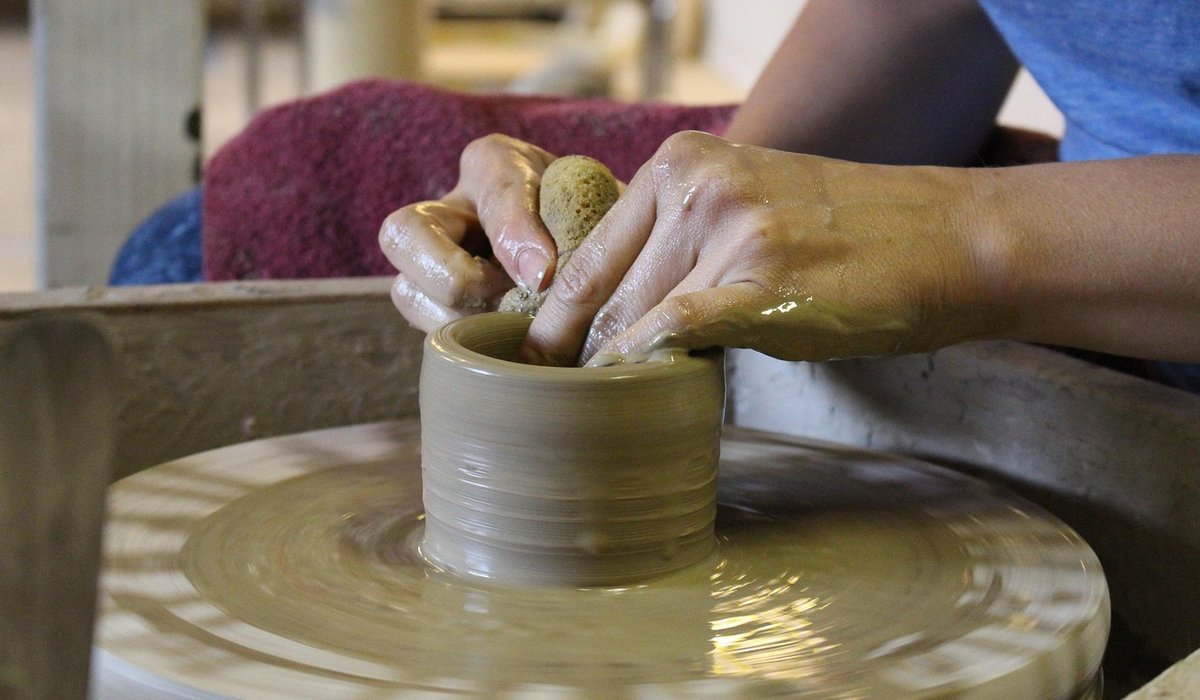
Buying your first pottery wheel is a big moment. It turns a hobby into a daily practice, and for many UK makers the dream is a small garden shed studio: a quiet corner, a radio, a bag of clay, and a wheel that hums rather than roars. Second-hand wheels are often the best value, but a model that suits a large teaching studio may be wrong for a shed. Before you hand over cash, think about space, wheel head size, motor power, noise, and the damp realities of a British garden.
A wheel that feels perfect in a spacious workshop can be miserable in a 6ft x 8ft potting shed. Start by measuring the clear floor area. You need at least 1.2m of width for the wheel, your stool, and a small table for tools and bats. Most home wheels weigh between 30kg and 60kg, so check the path from car to shed: narrow gates, steps, and gravel can turn delivery into a saga. A cast-iron frame is stable but heavy; an aluminium or pressed-steel model is easier to move but may vibrate more.
Power matters too. UK wheels run on 240V and should be plugged into a 13 amp socket protected by an RCD. Avoid long extension leads, especially in a damp garden. If your shed has no power, budget for an electrician before you budget for the wheel. Condensation is the silent killer of second-hand equipment: a wheel stored in an unheated shed will rust bearings and motor housings unless you insulate, ventilate, and use a cover.
Most home wheels have a 25cm (10in) or 30cm (12in) wheel head. A 25cm head is fine for mugs, bowls, and small jugs up to about 2–3kg of clay. A 30cm head gives you room for platters, larger jars, and 5kg-plus throwing. If you mainly make tableware, 25cm is generous; if you dream of big moon jars, hold out for 30cm. Check the bat pins: two standard pins are common, but some older wheels use a single pin or a threaded head, which limits your choice of bats.
Comfort is not a luxury. Your wheel head should sit around 60–70cm from the floor when you are seated, though this depends on your height and stool. Look for a splash pan that lifts off easily for cleaning, and a wheel head that can be removed or reversed. A wheel with a fixed splash pan and awkward access will make every session a chore.
Motor power is quoted in watts or horsepower. For a home studio, 250W (around 1/3 HP) is the sensible minimum for small work. If you throw 5kg regularly, look for 375W (1/2 HP) or more. Torque at low speeds matters more than top speed: a wheel that stalls when you centre a stiff bag of stoneware clay is frustrating. Brushless DC motors are smooth, quiet, and efficient, while traditional AC motors with belts are reliable and easier to repair. Either can be excellent.
The foot pedal is your main interface with the clay. It should build speed smoothly, not jerk or stick. Test it slowly through the whole range. A reversing switch is useful for left-handed throwers and for trimming, and a wheel that runs quietly at low speed is a joy. Check the voltage plate: UK models are 240V, 50Hz. If a wheel was imported from elsewhere, make sure it has not been crudely converted.
Noise is the issue that catches new buyers out. A wheel that sounds fine in a noisy shop can seem deafening in a quiet garden. Belt-driven wheels tend to hum and rumble; direct-drive models can produce a high whine. Most domestic wheels run at around 55–70 dB, and anything under 60 dB is considered quiet. If your shed sits close to a neighbour’s fence or bedroom window, test the wheel under load, not just free-spinning. Throwing clay adds its own thumping and splashing.
You can reduce noise with a thick rubber mat under the wheel, insulated shed walls, and sensible timing. Avoid early mornings and late evenings. If the wheel has a metal frame, check that it sits flat and does not rock; a rocking wheel transmits vibration through the floor. A quiet wheel is not just polite — it lets you throw for longer without fatigue.
Second-hand wheels can be brilliant, but only if you inspect them properly. Ask for a video of the wheel running with clay, and if possible, test it in person for at least 20 minutes. Listen for grinding, squealing, or uneven speed. Check the wheel head for side-to-side play and runout: spin it by hand and watch for wobble. Lift the head gently to feel for bearing clunk. A little play may be adjustable; a lot means new bearings.
Once the wheel is home, clean it thoroughly and lubricate any grease points. Place it on a rubber mat, and bolt it down if the floor allows. Fit an RCD, keep the cable off the damp floor, and ventilate the shed when you work. In winter, a small dehumidifier or a light bulb in a safe enclosure can help keep condensation at bay. Cover the wheel when not in use, wipe it down after every session, and run it briefly each month. With a little care, a well-chosen second-hand wheel can serve you for years — and your garden shed will become the best studio you have ever had.


We are not gonna make spamming
